Proxy vs VPN: Which One is Better for Security and Privacy?
Introduction
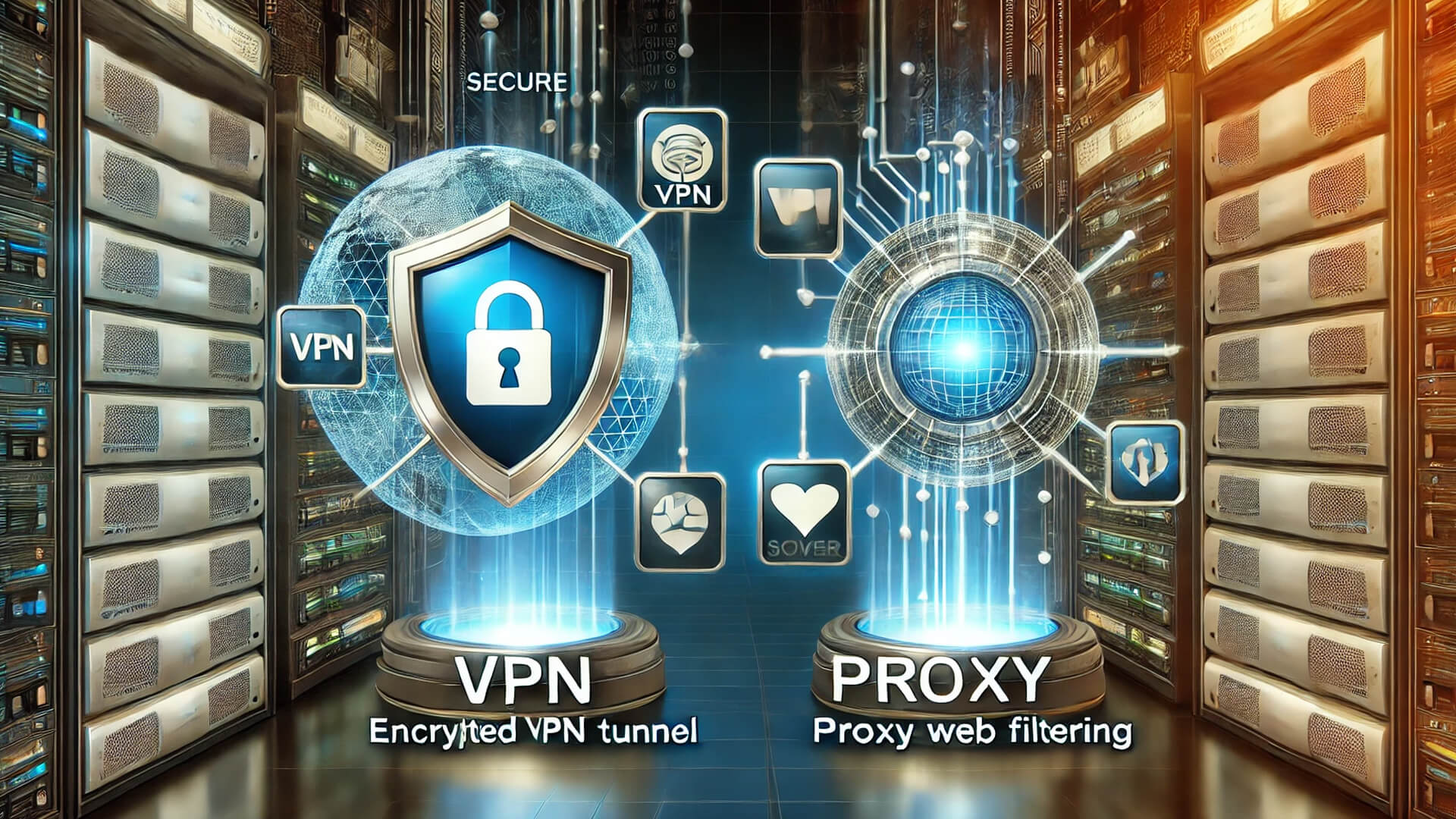
In today’s digital world, ensuring online privacy and security is crucial. Two common technologies used for this purpose are Proxy and VPN. While both can hide a user’s IP address and help access restricted content, they differ significantly in functionality and security level.
What is a Proxy?
A proxy is an intermediary server that acts as a bridge between the user and the internet. When accessing a website through a proxy, the request is first sent to the proxy server before reaching its final destination. This way, the website only sees the proxy’s IP address, not the user’s real IP.
Types of Proxy
-
HTTP Proxy: Handles only HTTP and HTTPS traffic, suitable for web browsing.
-
SOCKS Proxy: Supports various traffic types, including email and torrent.
-
Transparent Proxy: Does not hide the user’s IP and is often used for caching in corporate networks.
-
Reverse Proxy: Used by servers to distribute traffic across multiple backend servers.
Advantages of Proxy
-
Helps bypass geographic restrictions.
-
Can cache content to speed up website access.
-
Does not require additional software installation.
Disadvantages of Proxy
-
Does not encrypt data, making it vulnerable to cyber threats.
-
Only works for specific applications like browsers.
What is a VPN?
A VPN (Virtual Private Network) encrypts all internet traffic and routes it through a VPN server before reaching the final destination. This ensures that user data remains secure and cannot be easily intercepted.
Types of VPN
-
OpenVPN: Highly secure open-source protocol.
-
L2TP/IPSec: A combination of protocols offering extra security.
-
PPTP: Faster but less secure compared to others.
-
WireGuard: Modern protocol with high performance and strong encryption.
Advantages of VPN
-
Encrypts data, making it secure from interception.
-
Protects connections when using public Wi-Fi.
-
Accesses geographically restricted content on all applications, not just browsers.
Disadvantages of VPN
-
Can slow down internet speed due to encryption.
-
Requires a paid subscription for premium services.
Proxy vs VPN Comparison
| Feature | Proxy | VPN |
| Security | No encryption | Fully encrypted data |
| Privacy | Hides only IP | Hides IP + secure data |
| Speed | Faster due to no encryption | Can be slower due to encryption |
| Coverage | Specific applications only | Entire internet traffic |
| Cost | Free or low-cost | Usually paid |
Conclusion: Which One to Choose?
The choice between a proxy and a VPN depends on the user’s needs:
-
Use a proxy for quick access to blocked websites with a different IP.
-
Use a VPN for full security, data encryption, and better privacy.
If you frequently use public Wi-Fi or want to protect your personal data from hackers, a VPN is the better choice. However, if you just need quick access to blocked sites without encryption, a proxy can be a suitable alternative.