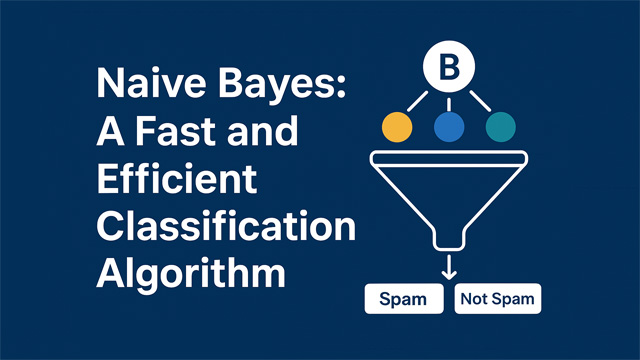

Neural Network: Understanding the Artificial Brain in the World of AI

Artificial Intelligence (AI) is becoming more integrated into daily life. From movie recommendations on streaming apps, facial recognition on smartphones, to self-driving cars, many of these technologies rely on Neural Networks. Neural networks are often called the “artificial brain” because they are inspired by how the human brain processes information.
What is a Neural Network?
A neural network is a computational model that mimics the structure of the human brain. It is made up of layers of nodes or artificial neurons connected to each other. Each node receives information, processes it, and passes the result to the next node.
Think of it like an electrical wiring system. Each wire carries current to another point, and similarly, a neural network carries data to be processed.
How Neural Networks Work
Neural networks generally consist of three main parts:
-
Input Layer – receives raw data, such as images or text.
-
Hidden Layers – process the data using mathematical calculations. The more hidden layers, the more complex the analysis.
-
Output Layer – provides the final prediction or decision.
For example, when given a cat image, the input layer reads the pixels, hidden layers detect features like ears or tail, and the output layer states “this is a cat.”
Advantages of Neural Networks
-
Can recognize complex patterns that humans may miss.
-
Flexible – applicable across multiple fields such as healthcare, finance, and entertainment.
-
Self-learning – performance improves with more data.
Limitations of Neural Networks
-
Require large datasets – poor results with limited data.
-
High computational demand – need powerful hardware.
-
Lack of transparency – often called a “black box” since it’s hard to explain how predictions are made.
Example Applications of Neural Networks
-
Healthcare: detecting cancer from medical images.
-
Transportation: powering autonomous vehicles that recognize roads and traffic signs.
-
Finance: spotting fraudulent or suspicious transactions.
-
Entertainment: generating new music or artwork through generative AI.
Conclusion
Neural networks are at the core of many modern AI innovations. Despite their limitations, they have proven to deliver intelligent solutions across industries. By understanding the basics of neural networks, we can better appreciate how AI functions as an “artificial brain.”