Understanding the MOORA Method: A Complete Explanation
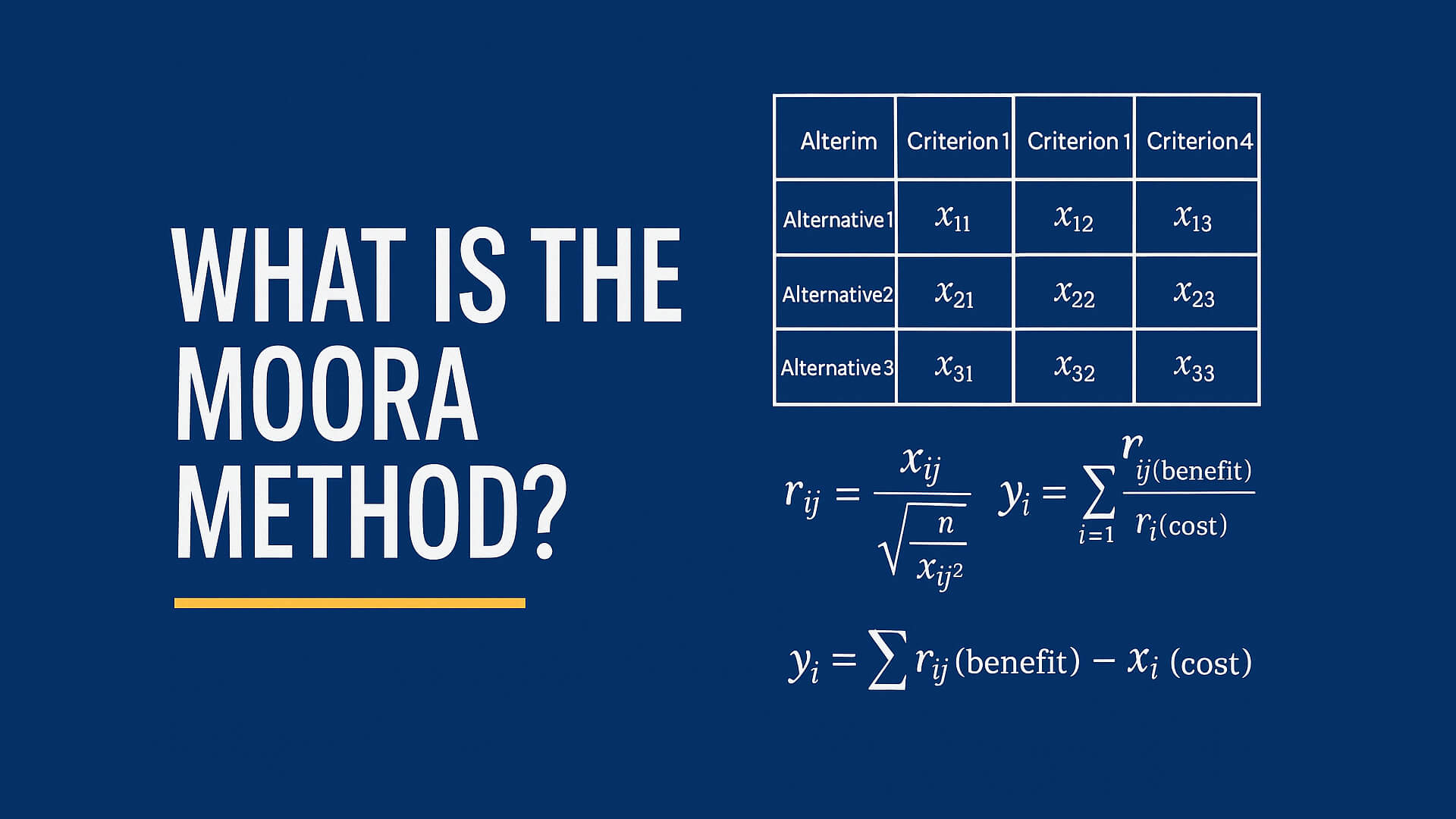
In decision-making processes, especially in fields such as management, industrial engineering, and decision support systems, several multi-criteria evaluation methods are commonly used. One popular and effective method due to its simplicity is the MOORA method. This article explains what the MOORA method is and how it works in detail.
What Is the MOORA Method?
MOORA stands for Multi-Objective Optimization on the basis of Ratio Analysis. It is a multi-criteria decision-making (MCDM) method used to select the best alternative based on multiple criteria, which may include both benefits and costs.
The method was first introduced by Brauers and Zavadskas, and has since been widely used in various applications such as vendor selection, project evaluation, site selection, and computerized decision support systems.
Objectives of the MOORA Method
The primary goals of the MOORA method are to:
-
Optimize multiple objectives simultaneously,
-
Simplify the decision-making process,
-
Provide objective and measurable results using the ratio of each alternative’s value to the overall total for each criterion.
Steps in the MOORA Method
1. Construct the Decision Matrix
Begin by creating a matrix where each row represents an alternative and each column represents a criterion. Each element xijx_{ij}xij denotes the value of alternative iii under criterion jjj.
2. Normalize the Decision Matrix
Normalize the data using the formula:
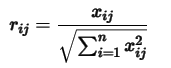
This ensures all criteria are scaled equally, removing unit inconsistencies.
3. Calculate the MOORA Score
The MOORA score is calculated by:

-
is the total of benefit-type criteria,
-
is the total of cost-type criteria (subtracted).
4. Rank the Alternatives
The alternative with the highest yiy_iyi score is considered the most optimal choice.
Simple Example
Suppose you're choosing one of three smartphones based on three criteria: performance (benefit), price (cost), and camera (benefit). After inputting the data into a matrix, normalizing it, and calculating the MOORA scores, you’ll be able to identify which smartphone offers the best overall value.
Advantages of the MOORA Method
-
Simple to understand and implement
-
Suitable for various data units
-
Effective in handling multi-criteria decision problems
-
Objective results based on mathematical calculations
Disadvantages of the MOORA Method
-
May not account for the importance (weights) of criteria unless modified
-
Less ideal for complex interrelated decision factors
Conclusion
The MOORA method is a valuable tool for evaluating alternatives across multiple criteria. With its straightforward normalization and scoring process, it provides a practical and transparent approach to decision-making. It's applicable across various industries and is particularly useful when quick, reliable decisions are needed.