

How AI Works Behind the Scenes and Why It Requires a GPU with Large VRAM
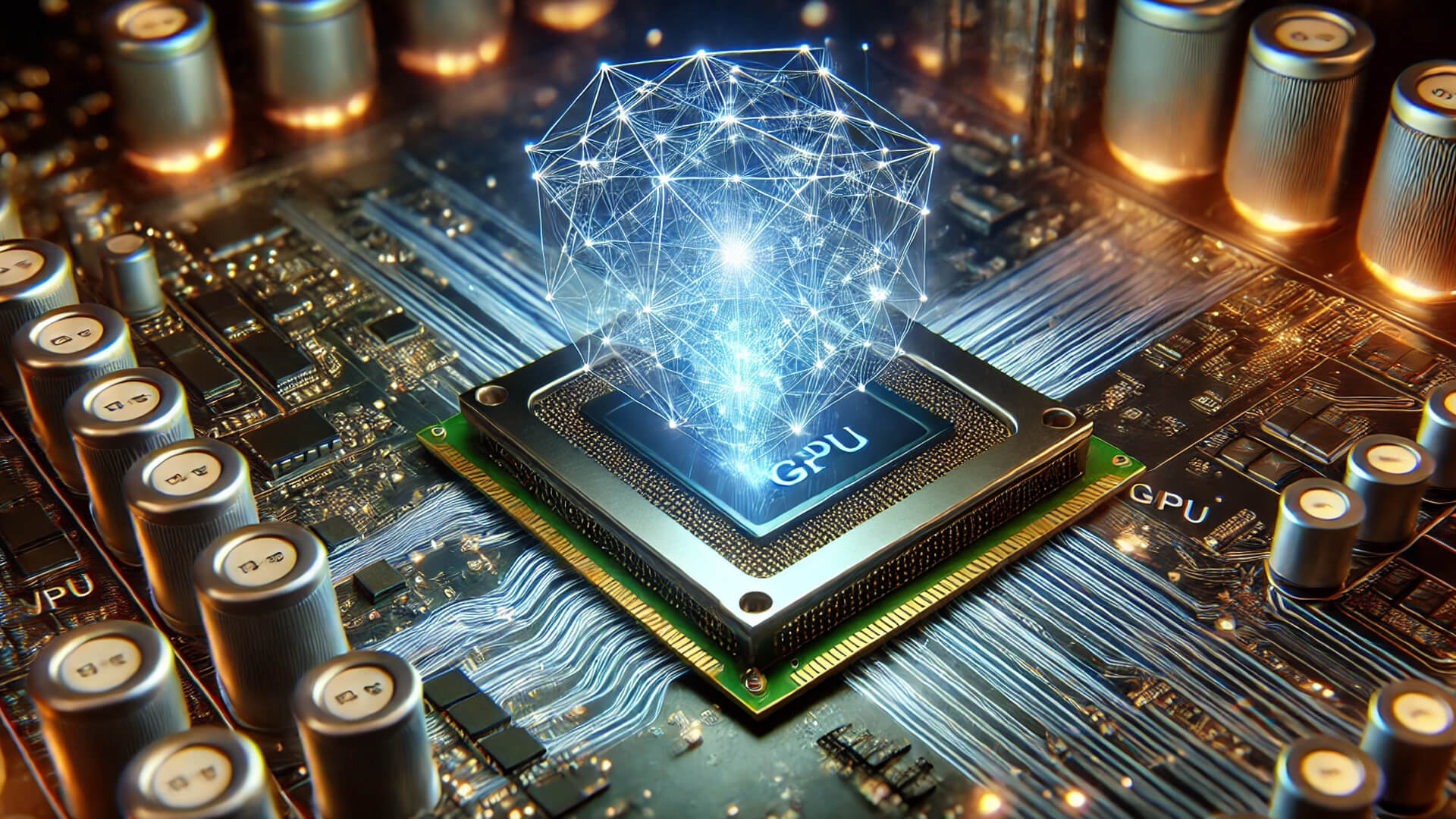
Artificial Intelligence (AI) has become an integral part of modern technology. From virtual assistants like Siri and Google Assistant to AI models capable of generating realistic images, all these advancements rely on complex computational processes. However, behind AI’s sophistication lies a computational architecture heavily dependent on powerful hardware, especially GPUs with large VRAM. This article will provide a detailed explanation of how AI works and why GPUs are essential in AI processing.
1. How AI Works?
AI operates based on machine learning and deep learning concepts. The process involves several key stages:
a. Data Collection
Data is the primary fuel for AI. AI requires vast datasets to learn. For example, facial recognition AI needs thousands to millions of images to understand different variations of human faces.
b. Data Processing and Cleaning
Before being used for training, data must be cleaned of anomalies, duplicates, or irrelevant information. This ensures AI learns from accurate and reliable data.
c. AI Model Training
In this stage, AI is trained using machine learning techniques. The model goes through multiple iterations to adjust weights and parameters, improving accuracy.
d. Inference or Prediction
Once trained, AI can make predictions based on new data. For instance, an AI model trained to detect cancer in medical images can analyze new images and provide diagnoses.
2. Why Does AI Require a GPU with Large VRAM?
The GPU (Graphics Processing Unit) has an architecture well-suited for handling AI workloads. Here’s why GPUs with large VRAM are crucial for AI:
a. Fast Parallel Processing
GPUs have thousands of small cores capable of performing calculations in parallel. AI training involves extensive matrix computations, which GPUs handle much faster than CPUs.
b. Large Memory Requirement (VRAM)
Modern AI models, especially deep learning models like GPT or Stable Diffusion, require significant memory to store model weights and input data. Large VRAM allows AI models to process more data simultaneously without memory limitations.
c. Efficiency in Tensor Operations
AI relies heavily on tensor operations involving large-scale matrix multiplications and additions. GPUs are designed to handle these operations more efficiently than CPUs.
d. Optimization with CUDA and Tensor Cores
NVIDIA provides CUDA (Compute Unified Device Architecture) and Tensor Cores, which optimize AI computations. These technologies accelerate AI training, making it faster and more efficient.
3. GPU vs. CPU in AI Processing
| Factor | CPU | GPU |
| Number of Cores | Dozens | Thousands |
| Parallel Processing | Limited | Highly Optimized |
| Energy Efficiency | Less Efficient | More Efficient |
| AI Training Speed | Slow | Very Fast |
| AI Optimization | Less Optimal | Designed for AI |
Conclusion
AI functions through a complex learning process that requires vast data processing capabilities. A GPU with large VRAM is a critical component in AI development due to its ability to handle parallel computing, store large amounts of data, and optimize the mathematical calculations needed in AI. Without powerful GPUs, modern AI development would be significantly slower and less efficient.