Differences Between VPS, Dedicated Server, and Cloud Hosting: Which One is Right for You?
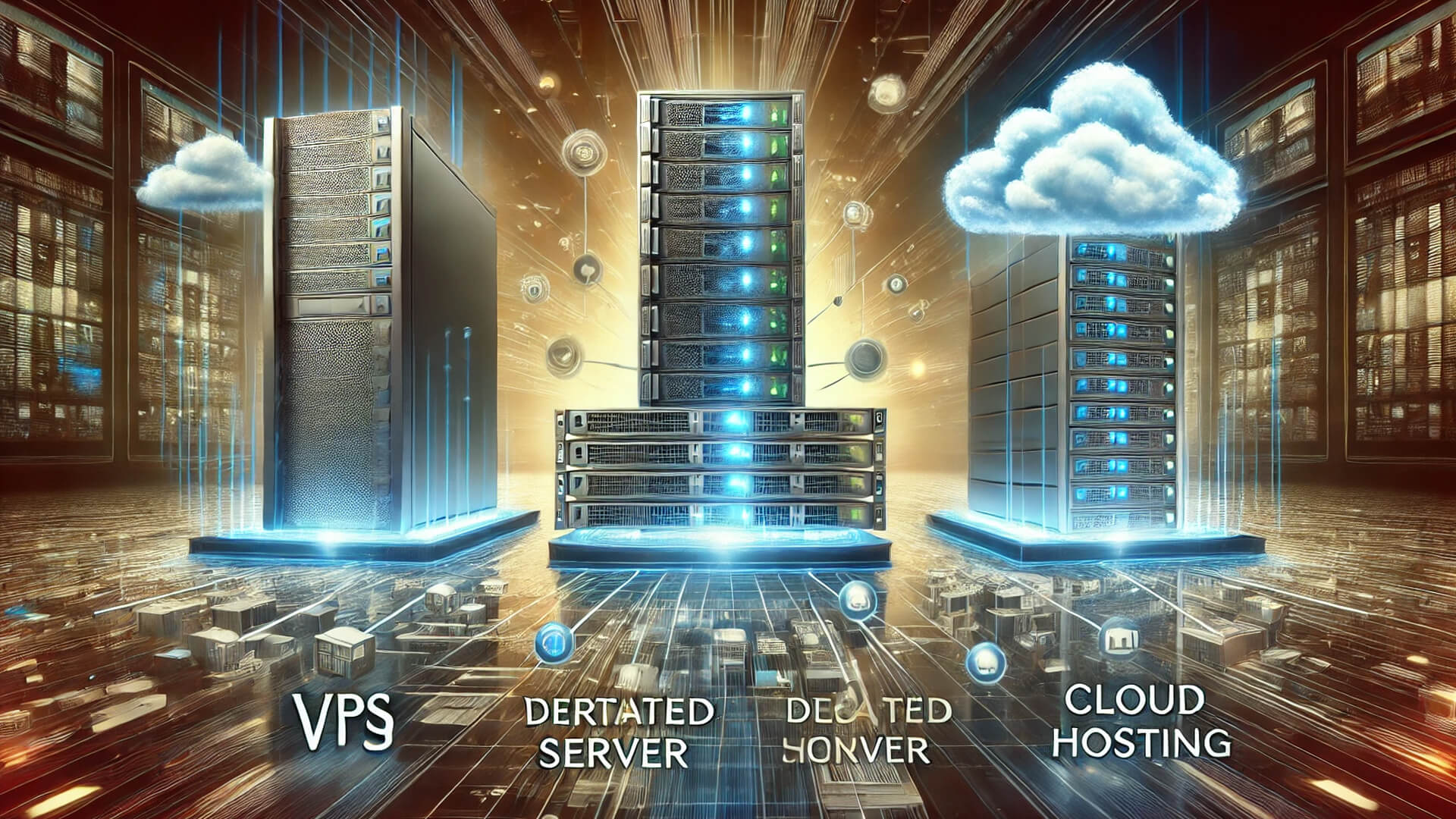
In the world of web hosting, choosing the right service is crucial to ensuring the performance and reliability of your website or application. The three main options often considered are VPS (Virtual Private Server), Dedicated Server, and Cloud Hosting. Each has its own advantages and disadvantages that need to be aligned with your business or project needs. This article will discuss the differences between them to help you make the best choice.
1. What Are VPS, Dedicated Server, and Cloud Hosting?
Virtual Private Server (VPS)
A VPS is a hosting solution that uses virtualization technology to divide a single physical server into multiple independent virtual servers. Each VPS gets its own isolated resources and operating system, providing more flexibility compared to shared hosting.
Advantages of VPS:
-
More affordable than a dedicated server
-
Isolated resources from other users
-
Flexibility in management and configuration
Disadvantages of VPS:
-
Performance still depends on the main physical server
-
Requires technical knowledge for configuration and management
Dedicated Server
A dedicated server is a hosting service where an entire physical server is exclusively used by one user. This provides full control over all server resources without sharing with others.
Advantages of Dedicated Server:
-
Best performance since all server resources are used exclusively
-
High security as it is not shared with other users
-
Full control over hardware and software
Disadvantages of Dedicated Server:
-
More expensive compared to VPS and cloud hosting
-
Requires technical expertise for server management
Cloud Hosting
Cloud hosting is a cloud-based hosting service that utilizes multiple connected servers to enhance scalability and reliability. Instead of relying on a single physical server, cloud hosting uses a network of virtual servers to balance workload and prevent downtime.
Advantages of Cloud Hosting:
-
High scalability – resources can be increased or decreased as needed
-
More reliable since data is stored across multiple servers
-
Flexible cost based on usage
Disadvantages of Cloud Hosting:
-
Costs can be unpredictable if usage spikes drastically
-
Security and privacy depend on the cloud service provider
2. Comparison of VPS, Dedicated Server, and Cloud Hosting
| Feature | VPS | Dedicated Server | Cloud Hosting |
|---|---|---|---|
| Performance | Good, but shares physical resources | Very high, no resource sharing | Flexible, depends on scaling |
| Scalability | Limited | Not flexible, requires manual upgrade | Highly flexible |
| Security | Decent, but still shares hardware | Very high | Depends on service provider |
| Control | High | Full | Limited (depends on platform) |
| Cost | More affordable than dedicated servers | Expensive | Variable, can be cost-effective for small scale |
3. Which One is Right for You?
-
Choose VPS if you need more flexibility and control than shared hosting but at a more affordable cost than a dedicated server.
-
Choose Dedicated Server if you need high performance, maximum security, and full server control.
-
Choose Cloud Hosting if you require flexible, scalable services and do not want to rely on a single physical server.
Conclusion
Choosing between VPS, Dedicated Server, and Cloud Hosting depends on your specific needs. If you are looking for a balance between performance and cost, VPS is the right choice. If performance and security are your top priorities, Dedicated Server is more suitable. Meanwhile, if you need scalability and flexibility, Cloud Hosting is the best option.
By understanding the advantages and disadvantages of each service, you can make the right decision to support the growth of your website or application.