Comparison of Popular Backend Frameworks: Laravel vs Django vs Express.js
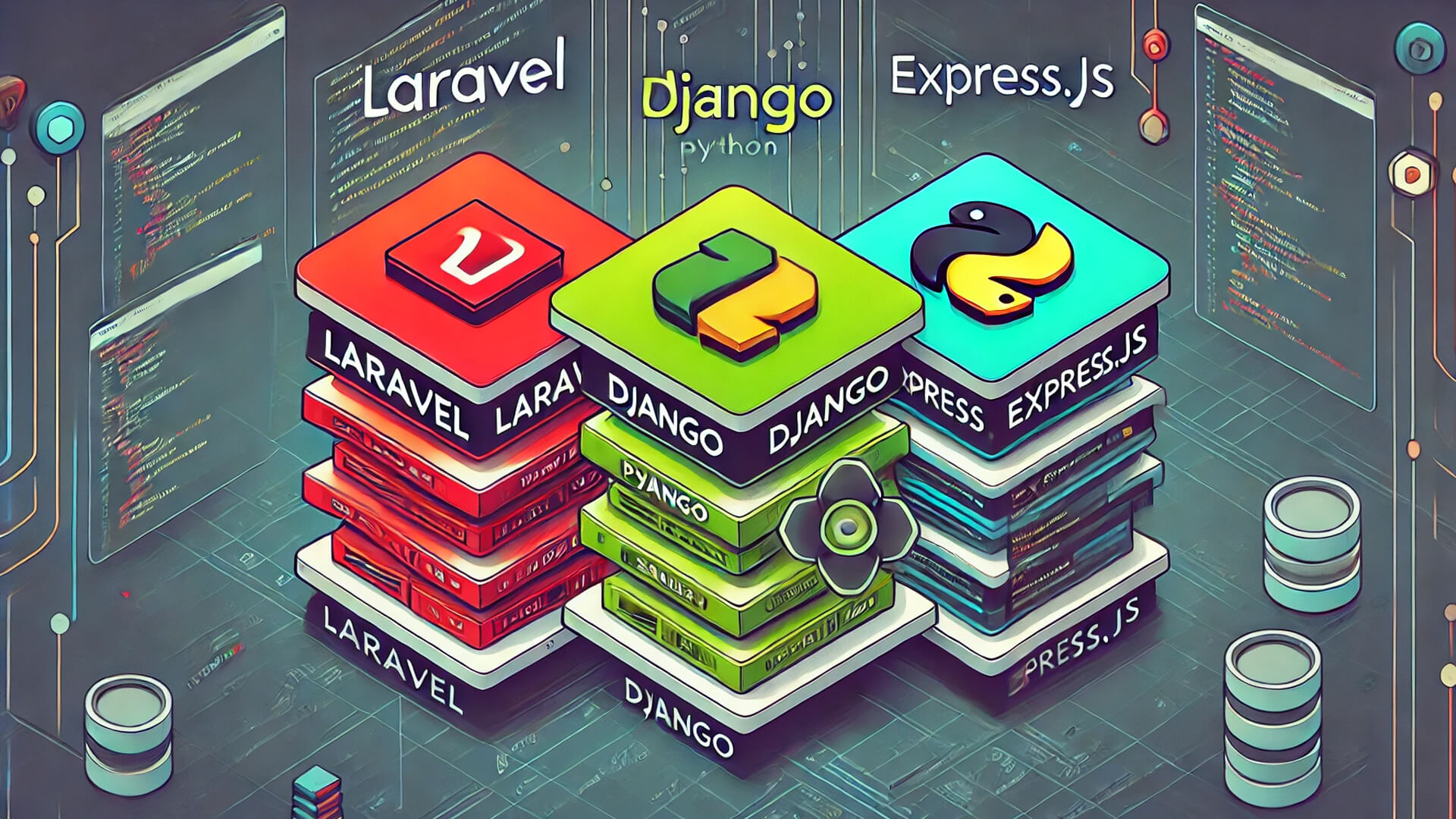
In the world of web development, choosing the right backend framework is crucial to ensuring efficiency, scalability, and ease of application management. Laravel, Django, and Express.js are three highly popular backend frameworks, each with its own strengths and weaknesses. This article will compare these frameworks based on various key aspects.
1. Introduction to the Frameworks
Laravel
Laravel is a PHP framework developed by Taylor Otwell. It follows the Model-View-Controller (MVC) architecture and offers an elegant syntax along with built-in features such as ORM (Eloquent), routing system, and template engine (Blade).
Django
Django is a Python-based framework that follows the Model-Template-View (MTV) design pattern. It is developed with the "batteries included" principle, meaning that many features come built-in, such as authentication, ORM, and high-level security mechanisms.
Express.js
Express.js is a minimalist JavaScript backend framework that runs on top of Node.js. It provides high flexibility and is often used for developing microservices-based applications or APIs.
2. Comparison Based on Key Aspects
a. Ease of Use
-
Laravel: Very beginner-friendly with comprehensive documentation and easy-to-understand syntax.
-
Django: Has a steeper learning curve compared to Laravel but is powerful for data-driven applications.
-
Express.js: Simple and flexible but requires a deeper understanding of JavaScript and middleware.
b. Performance
-
Laravel: Generally slower than Django and Express.js since PHP is heavier than Python and JavaScript.
-
Django: Offers better performance than Laravel, especially in handling complex database operations.
-
Express.js: Extremely fast and lightweight due to its event-driven, asynchronous nature in Node.js.
c. Scalability
-
Laravel: Suitable for small to medium-sized applications but requires additional optimization for large-scale applications.
-
Django: Highly suitable for large-scale applications due to its modular design and strong structure.
-
Express.js: Flexible and easily scalable using a microservices architecture.
d. Security
-
Laravel: Comes with built-in security features like protection against SQL Injection and CSRF.
-
Django: One of the most secure frameworks, implementing various security features by default.
-
Express.js: More vulnerable to attacks if not properly configured due to its minimalist nature.
e. Ecosystem and Community
-
Laravel: Has a large community with many resources and additional packages like Laravel Forge and Nova.
-
Django: Supported by a strong Python community with numerous plugins and extensions.
-
Express.js: Part of the extensive JavaScript ecosystem with many available middleware options.
Conclusion
Choosing the best backend framework depends on the project requirements and developer preferences:
-
Laravel is ideal for business applications and startups that require rapid development with easy-to-understand syntax.
-
Django is perfect for data-driven applications requiring high security and strong database management.
-
Express.js is the best choice for API-based or microservices applications with high performance needs.
By understanding the advantages and disadvantages of each framework, you can choose the one that best fits your project needs.