
Understanding APIs and the Use of RESTful APIs

What Is an API?
An API (Application Programming Interface) is a set of definitions and protocols that allows one software application to communicate with another. An API defines how software components should interact, providing a standard method for accessing functions or data of other applications.
APIs can be used in various contexts, including operating systems, software libraries, and web services. There are several types of APIs, such as web-based APIs, hardware-based APIs, and operating-system-based APIs.
What Is a RESTful API?
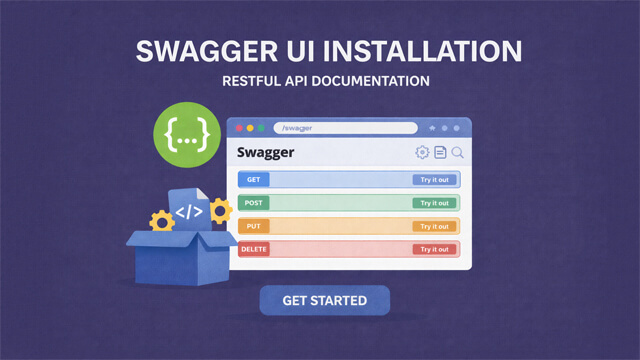
A RESTful API is a type of API that uses the principles of REST (Representational State Transfer), a very popular architecture for building web services. A RESTful API uses HTTP as its communication protocol and takes advantage of HTTP methods such as GET, POST, PUT, DELETE, and others to manage resources represented by URLs (Uniform Resource Locators).
The basic principles of a RESTful API include:
- Stateless: Every request from the client to the server must contain all the information needed to understand and process the request. The server does not store client state between requests.
- Client-Server: The REST architecture separates the client (which requests data or functions) from the server (which provides data or functions).
- Cacheable: Responses from the server must indicate whether they can be cached or not, to improve performance.
- Layered System: A client cannot directly tell whether it is connected to the end server or to an intermediary.
- Uniform Interface: A uniform interface allows easier interoperability between different systems.
Uses of RESTful APIs
RESTful APIs are very popular in web and mobile application development because of their simplicity and scalability. Here are some examples of how RESTful APIs are used:
-
Retrieving Data from the Server: Using the GET method to retrieve data from the server. For example, retrieving a list of products from an online store
GET /api/products
-
Sending Data to the Server: Using the POST method to send new data to the server. For example, adding a new product to an online store
POST /api/products { "name": "New Product", "price": 29.99 } -
Updating Data on the Server: Using the PUT or PATCH method to update data that already exists on the server. For example, updating the price of an existing product
PUT /api/products/1 { "price": 19.99 } -
Deleting Data from the Server: Using the DELETE method to delete data from the server. For example, deleting a product from an online store
DELETE /api/products/1
-
Authentication and Authorization: Using a RESTful API to manage user login and authorization of access to certain resources
POST /api/login
{
    "username": "user",
    "password": "pass"
}
Conclusion
An API is an important tool that allows various applications to communicate and interact with one another. A RESTful API, with its REST principles, provides an efficient and scalable way to build web services accessible over HTTP. Using a RESTful API covers various operations such as retrieving, sending, updating, and deleting data, as well as managing authentication and authorization, all of which are very useful in modern application development.