Why You Should Learn Rust: Key Reasons for Modern Systems Programming
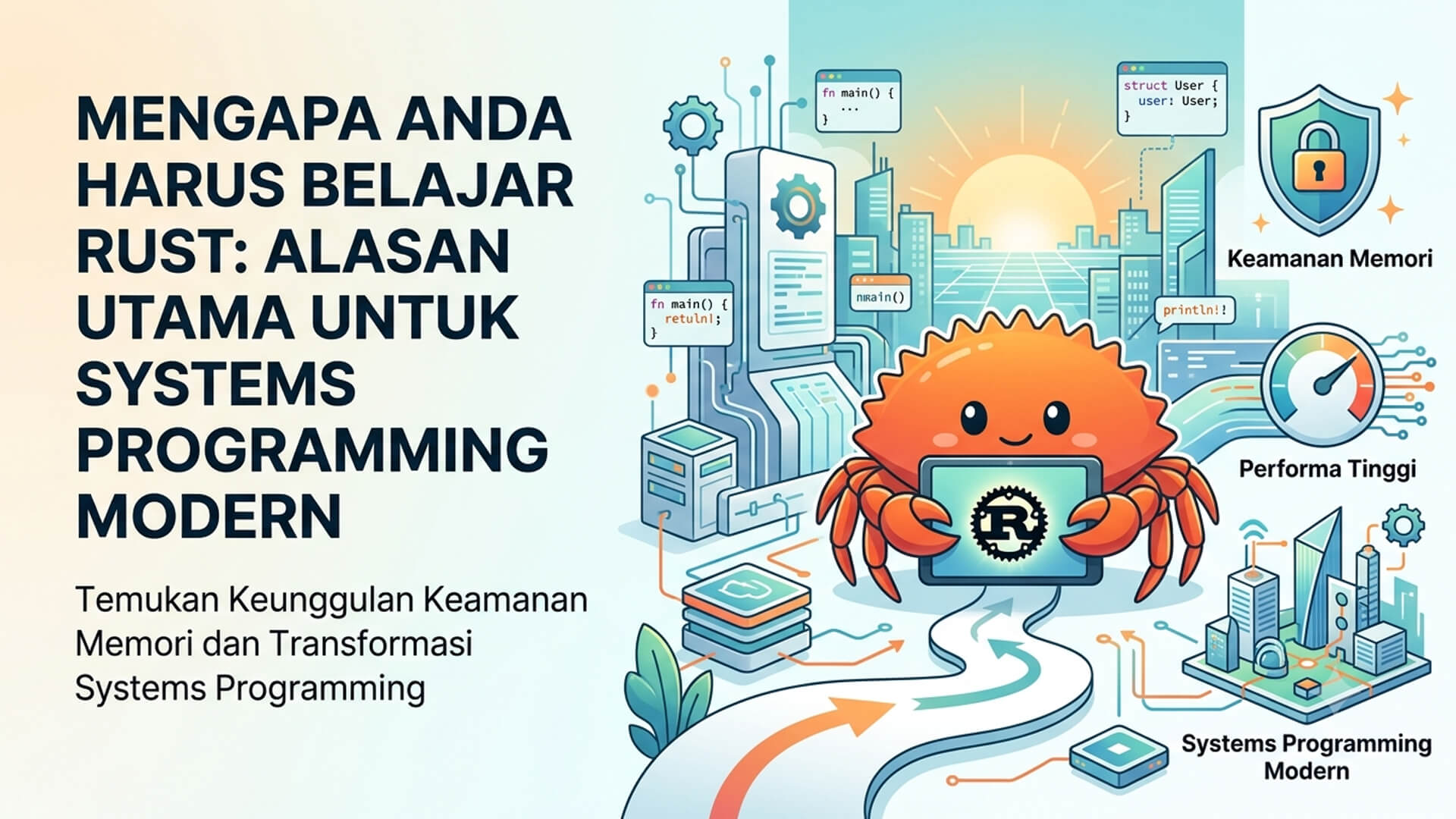
Introduction: The Significance of Rust in Modern Technology
In today's fast-paced digital era, the demand for fast, secure, and highly efficient software has never been greater. For decades, languages like C and C++ have dominated the domain of systems programming by offering developers direct control over hardware and memory management. However, this level of control often comes at a high price: critical memory bugs, buffer overflows, and complex race conditions that are notoriously difficult to debug. This is where Rust enters as a revolutionary solution. Originally developed by Mozilla, Rust offers the raw performance of C/C++ while guaranteeing absolute memory safety by default. Learning Rust is no longer just an option; it is a strategic investment for modern software engineers looking to build robust digital infrastructure.
What is Rust? A Clear Explanation
Rust is a multi-paradigm, general-purpose programming language designed for performance, safety, and safe concurrency. Unlike high-level languages like Java or Python, which rely on a Garbage Collector (GC) running in the background to manage memory, Rust introduces a unique memory ownership model. This model is strictly enforced at compile-time by the compiler through a set of ownership rules, borrowing mechanisms, and lifetime checkers. By doing so, Rust eliminates memory bugs entirely without the runtime overhead associated with a garbage collector, achieving what is known as zero-cost abstractions.
Key Functions and Features of Rust
Rust stands out in the systems programming landscape due to several innovative features. Here are at least four key functions that define the language:
- Memory Management Without a Garbage Collector: Using its signature ownership system, Rust automatically and safely allocates and deallocates memory during compilation, bypassing the need for a resource-heavy runtime garbage collector.
- Fearless Concurrency: Rust prevents data races—where multiple threads concurrently access and modify the same memory location—at the compiler level. This allows developers to write highly concurrent, multi-threaded programs with complete confidence.
- Incredibly Helpful Compiler: The Rust compiler (rustc) is renowned for its user-friendly error messages. When compilation fails, it does not just report the error; it provides highly detailed explanations and actionable suggestions to fix the code.
- Seamless Interoperability with C (Zero-Cost FFI): Rust can easily integrate with existing C codebases through its Foreign Function Interface (FFI), enabling developers to optimize or secure critical parts of legacy systems without needing a complete rewrite.
Implementation Steps: How to Get Started with Rust
Beginning your learning journey with Rust is straightforward if you follow these practical steps:
- 1. Install Rust via Rustup: The first step is to install the official Rust toolchain using rustup, the recommended version manager. Running the installation script in your terminal will configure the compiler (rustc), the package manager (cargo), and the offline documentation.
- 2. Master the Concept of Ownership: Study the core concepts of ownership, borrowing (using
&for read-only or&mutfor mutable references), and lifetimes. Grasping these rules is essential to write code that satisfies the compiler. - 3. Manage Projects with Cargo: Utilize Cargo, Rust's excellent built-in build tool, to bootstrap new projects (
cargo new), compile code (cargo build), run applications (cargo run), and manage third-party dependencies via theCargo.tomlfile. - 4. Practice Pattern Matching and Safe Error Handling: Write idiomatic Rust code by leveraging powerful language features like pattern matching (
match) and robust type wrappers such asResult<T, E>andOption<T>to eliminate null pointer exceptions. - 5. Build Small Projects and Explore the Ecosystem: Build a command-line interface (CLI) tool, a text parser, or a lightweight web server using popular crates like Tokio or Axum to familiarize yourself with Rust's rich library ecosystem.
Advantages and Benefits of Learning Rust
Acquiring Rust skills offers significant long-term advantages for both your career and the projects you build:
- Extreme Performance and Efficiency: Rust compiles directly to machine code, offering execution speeds comparable to C and C++. This makes it perfect for resource-constrained systems, game engines, embedded devices, and low-latency applications.
- Guaranteed Software Reliability: By eliminating common memory-related vulnerabilities (such as use-after-free, double free, and dangling pointers) at compile-time, Rust applications are incredibly stable and secure against exploits.
- Vibrant and Supportive Community: Rust boasts a highly active, welcoming, and inclusive community. Its package ecosystem is centralized on crates.io, providing developers with thousands of high-quality, open-source libraries.
- Strong Industry Adoption: Tech giants including Google, Microsoft, Amazon, and Meta are actively rewriting critical parts of their infrastructure in Rust. Additionally, the Linux kernel has officially adopted Rust as a supported language for writing drivers and modules.
Conclusion
In conclusion, Rust is not just another programming language; it represents a fundamental paradigm shift in systems development by proving that you do not have to sacrifice safety for performance. While the compiler's strictness presents a steeper initial learning curve, the investment is immensely rewarding. The result is software that is incredibly fast, highly secure, and exceptionally easy to maintain over time. For any developer looking to stay ahead in the future of systems programming, mastering Rust is an invaluable step forward.