Building a Dynamic Like/Dislike System with PHP & AJAX for Interactive Websites
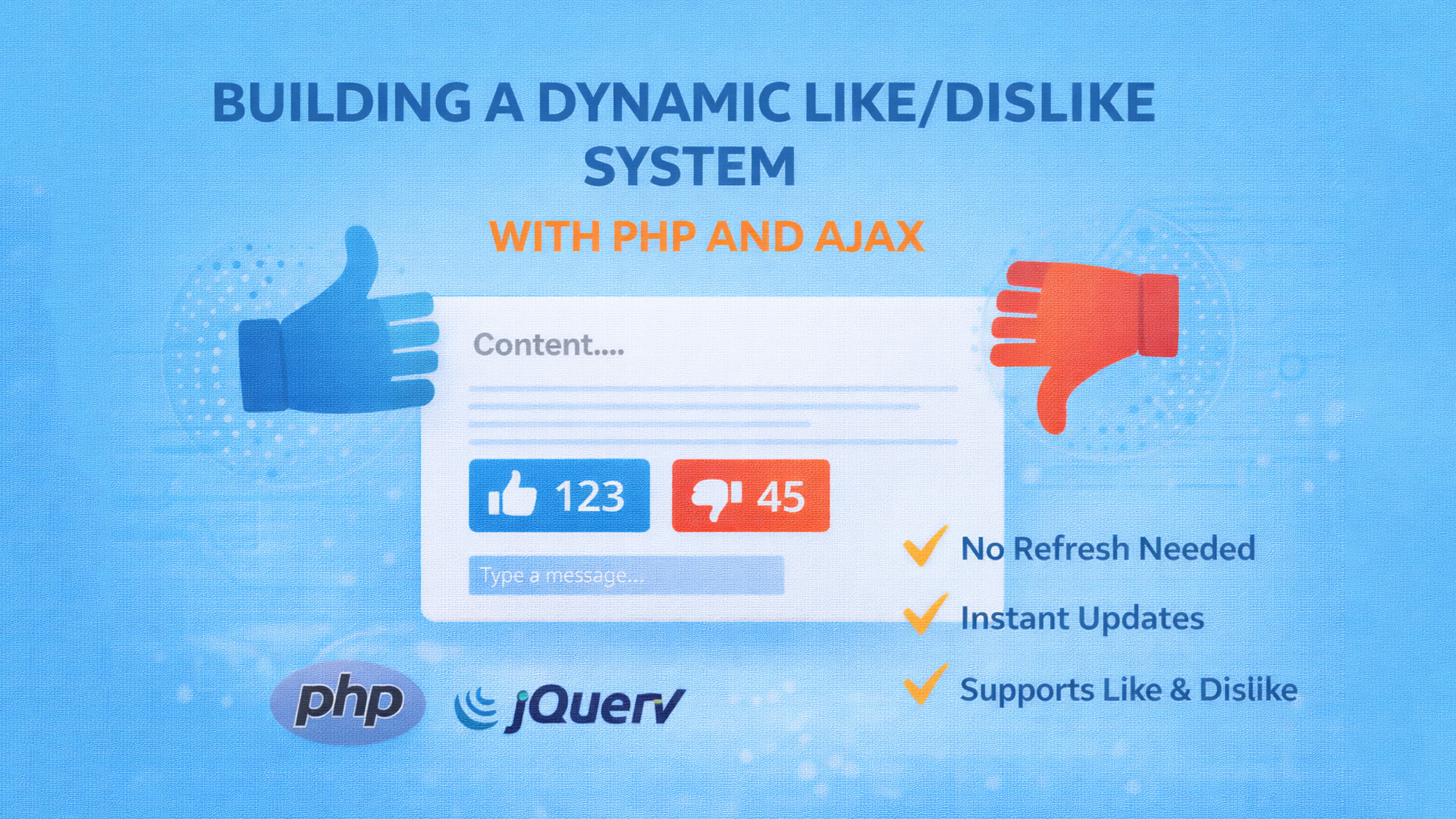
Like and Dislike features have become common components in modern websites. We can find them in blogs, news portals, online stores, forums, comment systems, and social platforms.
This feature allows visitors to react directly to content.
Many beginner developers think that creating a Like system requires advanced technologies such as WebSocket or modern JavaScript frameworks. In reality, PHP and AJAX are enough for creating a dynamic version.
The main advantage of AJAX is that users do not need to refresh the page after clicking a button.
The process happens instantly:
- User clicks Like
- AJAX sends data
- PHP processes it
- Database updates
- New values appear immediately
What is a Like/Dislike System?
A Like/Dislike system allows users to give feedback to content.
Examples include:
- Blog articles
- Product reviews
- Forum posts
- Videos
- Comments
- News articles
Typical display:
Like: 150
Dislike: 12
These values are stored in the database and updated dynamically.
Why Use AJAX?
Without AJAX:
- User clicks button
- Form submits
- Page reloads
- New data appears
With AJAX:
- User clicks button
- Request goes to PHP
- Database updates
- Numbers change instantly
The page remains active without refreshing.
Database Structure
Example table:
CREATE TABLE article(
id INT AUTO_INCREMENT PRIMARY KEY,
title VARCHAR(255),
content TEXT,
total_like INT DEFAULT 0,
total_dislike INT DEFAULT 0
);
This structure stores reaction counts directly.
Creating the Buttons
Example HTML:
<button id="like">
Like
</button>

<button id="dislike">
Dislike
</button>
AJAX will send requests automatically when users click the buttons.
AJAX Implementation
Example jQuery:
$("#like").click(function(){
$.ajax({
url:"process.php",
method:"POST",
data:{
article_id:1,
type:"like"
}
});
});
This sends information to PHP without reloading the page.
PHP Processing
Example:
UPDATE article
SET total_like=
total_like+1
WHERE id='$id'
The same logic applies for Dislike.
PHP receives the request and updates database values immediately.
Preventing Spam Clicks
Recommended methods:
- Session validation
- Cookies
- IP tracking
- User login
- Vote history table
This prevents duplicate reactions.
Further Improvements
You can expand the feature by adding:
- Remove Like option
- Multiple reactions
- User authentication
- Live updates
- Analytics dashboard
- Reaction history
Conclusion
PHP and AJAX are enough to build a dynamic Like/Dislike system without complex technologies.
This implementation works well for:
- Blogs
- Forums
- E-commerce websites
- Company sites
- Educational portals
- News websites
After mastering the basics, you can continue developing more advanced interaction systems and real-time features.