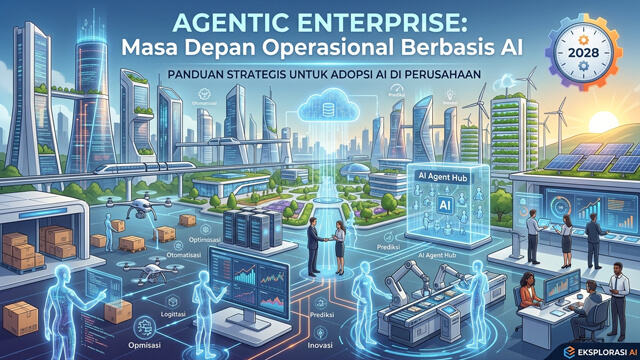
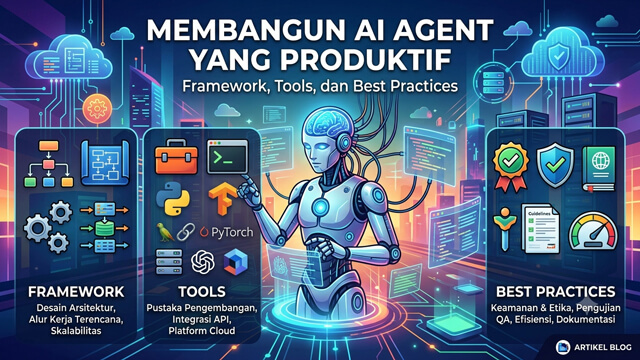
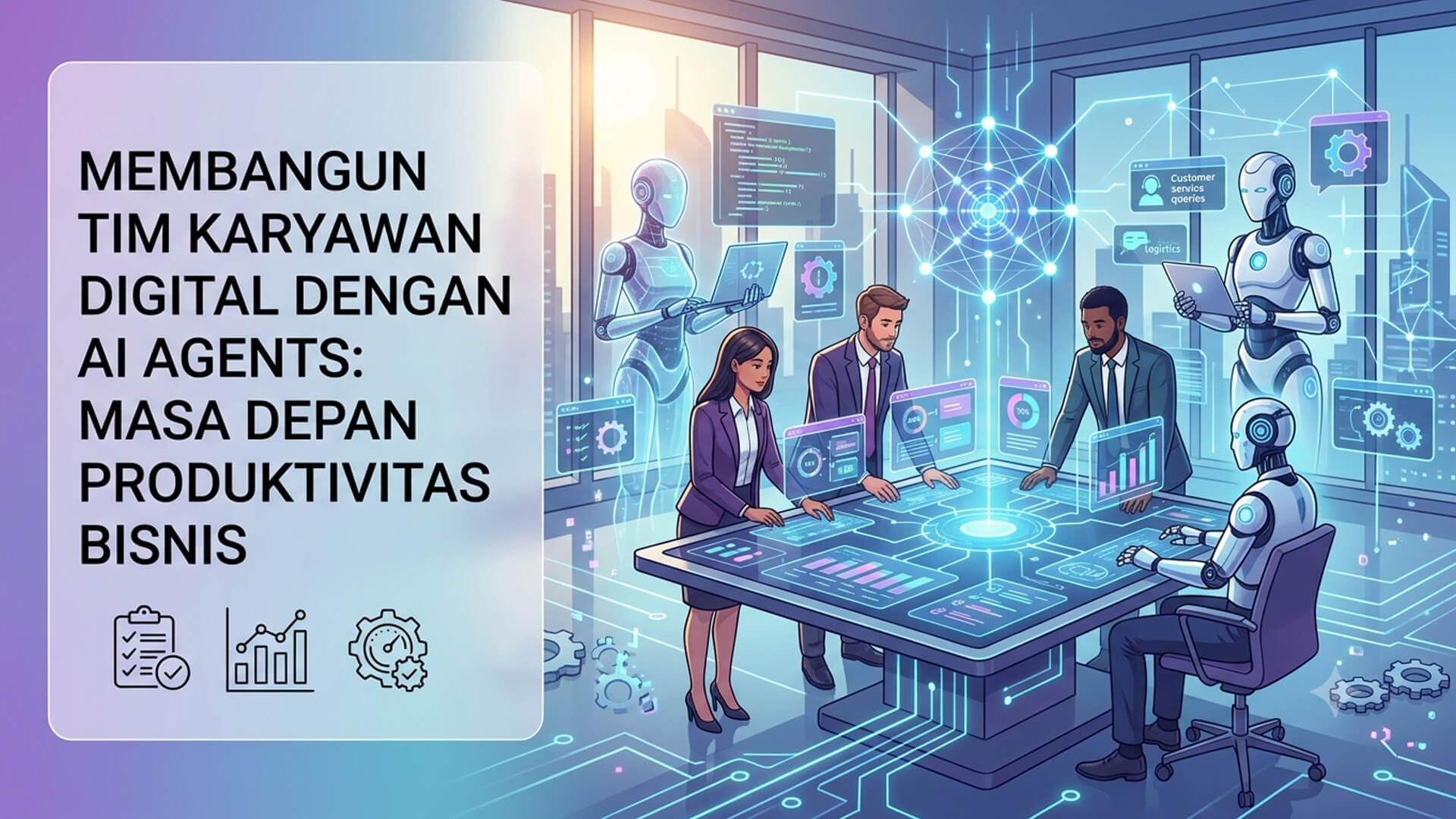
Building a Digital Employee Team with AI Agents: The Future of Business Productivity
Introduction: Why Digital Employees Matter in the Modern Era
In today's fast-paced digital era, the dynamics of the workplace are undergoing a highly revolutionary transformation. Companies are no longer relying solely on human workforces to complete complex and repetitive operational tasks. The rise of artificial intelligence (AI) technology has birthed a new concept known as digital employees. This concept is no longer just a futuristic vision, but a strategic necessity for businesses aiming to remain competitive. By adopting a team of digital employees powered by AI agents, organizations can accelerate productivity, minimize human errors, and allocate human resources to focus on high-value innovation and strategic decision-making.
Definition: What is a Digital Employee Team with AI Agents?
Fundamentally, a digital employee is an artificial intelligence-based software entity designed to mimic, execute, and optimize tasks typically performed by humans. Unlike traditional automation or simple rule-based bots, AI agents possess advanced cognitive capabilities. They are equipped with natural language processing (NLP), machine learning, and reasoning capabilities to understand context, make decisions autonomously, adapt to changing data, and interact efficiently with other software systems as well as human users. Building a team of digital employees means coordinating these specialized AI agents to work collaboratively toward achieving specific business objectives.
Key Functions of Digital Employees in Business Operations
Digital employees can be integrated into various departments with specific roles to optimize workflows. Here are at least four key functions that AI agents can perform within a work team:
- Autonomous Customer Support (Customer Support Agent): Handling customer interactions continuously across multiple channels, resolving common inquiries quickly, and escalating complex issues to human staff with complete contextual information.
- Administrative and Financial Process Automation (Operations & Finance Agent): Managing invoice processing, financial statement reconciliation, data entry into ERP systems, and compliance analysis quickly and accurately.
- Data Analysis and Report Generation (Data Analyst Agent): Monitoring business metrics in real-time, identifying market trends, performing predictive analytics, and generating detailed reports to support management decisions.
- Marketing and Sales Assistant (Marketing & Sales Assistant Agent): Qualifying sales leads, sending personalized follow-up emails, managing digital ad campaigns, and automatically tracking audience engagement on social media.
Implementation Steps: Building Your Digital Employee Team
The process of designing and deploying a team of AI agents requires a structured approach to ensure that technology investments yield optimal results. Here are the practical steps to get started:
- Identify Needs and Use Cases: Analyze your organization's workflow to find time-consuming, repetitive tasks that have clear rules. Start with a high-impact, low-risk pilot project.
- Design and Configure AI Agents: Determine the required architecture of the AI agents. Select appropriate Large Language Models (LLMs), design clear prompts, and define strict operational boundaries and data security protocols for each agent.
- Integrate with Existing Systems and Tools: Connect the AI agents with your company's software infrastructure, such as CRM, ERP systems, databases, and internal communication tools via APIs.
- Continuous Training and Testing: Train the AI agents using relevant internal historical data. Conduct thorough scenario testing to ensure the agents provide accurate responses and act in accordance with company guidelines.
- Human-AI Collaboration (Human-in-the-Loop): Establish an oversight mechanism where humans act as validators for crucial decisions or when the AI agent detects a high level of uncertainty in task execution.
Advantages of Having a Digital Employee Team
Integrating AI agents into the organizational structure provides several significant competitive advantages for long-term business growth:
- Operational Cost Efficiency: Reduces operational overhead costs as AI agents can work continuously without interruption, decreasing the need for overtime on routine administrative tasks.
- High Scalability: Digital employees can handle sudden workload spikes instantly without requiring time-consuming recruitment or retraining processes that take months.
- High Consistency and Accuracy: Minimizes errors in data entry, financial calculations, and compliance with standard operating procedures (SOPs).
- Empowerment of Human Employees: Frees human staff from tedious administrative chores, allowing them to focus on strategic initiatives, creativity, customer empathy, and product innovation.
Conclusion: The Future of Collaborative Work
Building a digital employee team with AI agents is no longer just an innovative option, but a crucial step to maintain business relevance amidst intense global competition. The key to the success of this transformation lies not in replacing the human workforce, but in creating a harmonious collaboration between human cognitive intelligence and the efficiency of AI technology. By carefully planning the implementation steps, organizations can build a highly productive, adaptive hybrid work environment that is ready to face future challenges.