Agentic Enterprise: The Future of AI-Driven Operations
Introduction: Why the Agentic Enterprise Matters in Modern Tech
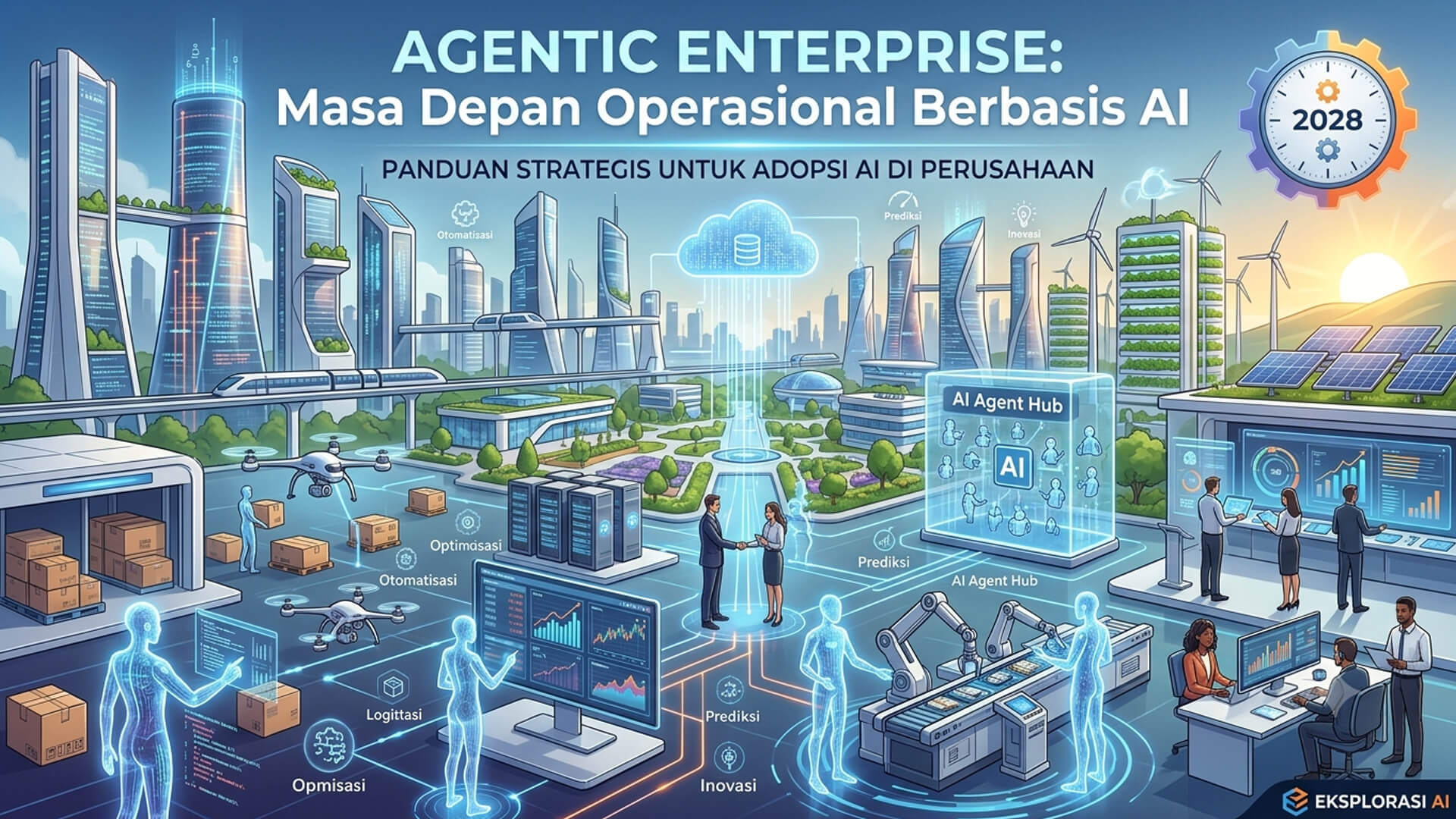
In today's rapidly shifting technological landscape, operational efficiency and decision-making velocity have become the cornerstones of business survival. Over the past decade, digitalization has enabled organizations to amass vast quantities of data. However, the modern challenge is no longer about collecting data, but rather about acting upon it instantly without bureaucratic friction or the constraints of human capacity. This is where the concept of the Agentic Enterprise emerges as a groundbreaking paradigm, fundamentally reshaping how organizations operate by positioning autonomous artificial intelligence as the core driver of business decisions.
Definition of the Agentic Enterprise
An Agentic Enterprise refers to a future-ready organizational model where operational systems no longer passively await human instructions. Instead, they are powered by a network of autonomous, proactive, and collaborative AI agents. Unlike traditional automation based on rigid, static rules (such as RPA), AI agents within an Agentic Enterprise possess the cognitive ability to comprehend context, plan actions, adapt to changing scenarios, and collaborate both with other agents and human teams to achieve specific business goals.
Key Functions of AI Agents in Enterprise Operations
To understand how this concept operates in practice, here are the primary functions executed by autonomous AI agents within the corporate ecosystem:
- Autonomous Decision-Making: AI agents analyze real-time data, evaluate multiple potential scenarios, and execute the optimal course of action without requiring constant human intervention.
- Dynamic Workflow Orchestration: Unlike rigid workflows, AI agents can dynamically redesign operational steps when obstacles or shifting priorities arise during execution.
- Proactive Monitoring and Anomaly Detection: Agents constantly monitor system integrity, financial transactions, or supply chains to identify potential bottlenecks or failures before they impact the business.
- Cross-System and Cross-Department Collaboration: AI agents act as intelligent bridges, connecting legacy software with modern applications to harmonize communication smoothly.
Implementation Steps for an Agentic Enterprise
Transitioning to an Agentic Enterprise requires a systematic and well-planned approach to guarantee security, efficiency, and smooth integration:
- 1. Identify and Map High-Impact Use Cases: Begin by identifying operational areas that feature high complexity but clear decision-making boundaries, such as customer support, supply chain management, or fraud detection.
- 2. Build an Integrated Data Infrastructure: AI agents require real-time access to high-quality, unified data. Designing clean and secure data pipelines is an absolute prerequisite before training any AI agent.
- 3. Develop and Train Specialized AI Agents: Construct specialized AI agents using Large Language Models (LLMs) tailored to your specific industry domain, and equip them with the necessary API access tools.
- 4. Establish Human-in-the-Loop Protocols: Define clear operational boundaries for autonomous actions, and specify high-stakes scenarios where human authorization remains mandatory for compliance and ethics.
- 5. Continuous Evaluation and Iteration: Regularly monitor agent performance, adjust decision-making parameters, and retrain models to ensure their actions remain aligned with shifting market dynamics.
Advantages of Adopting an Agentic Enterprise Model
Implementing autonomous agent technology provides organizations with profound, long-term strategic benefits:
- Unprecedented Operational Efficiency: Compressing task completion times from days to seconds, drastically reducing overhead costs.
- Limitless Scalability: Organizations can handle sudden spikes in workload instantaneously without needing to scale human headcount proportionally.
- Minimization of Human Error: Cognitive automation ensures high precision in complex data analysis and strict adherence to industry regulations.
- Empowerment of the Workforce: By delegating repetitive and analytical tasks to AI agents, human employees can focus on innovation, creative strategy, and high-value customer relationships.
Conclusion
The Agentic Enterprise is no longer a distant vision, but the logical next step in the evolution of business automation. By adopting autonomous AI agents, companies can operate faster, make smarter decisions, and achieve unprecedented levels of efficiency. Taking the first steps toward this transformation today will define your organization's competitive edge tomorrow.