The History of Web Development: From HTML1 to Web 3.0
Introduction
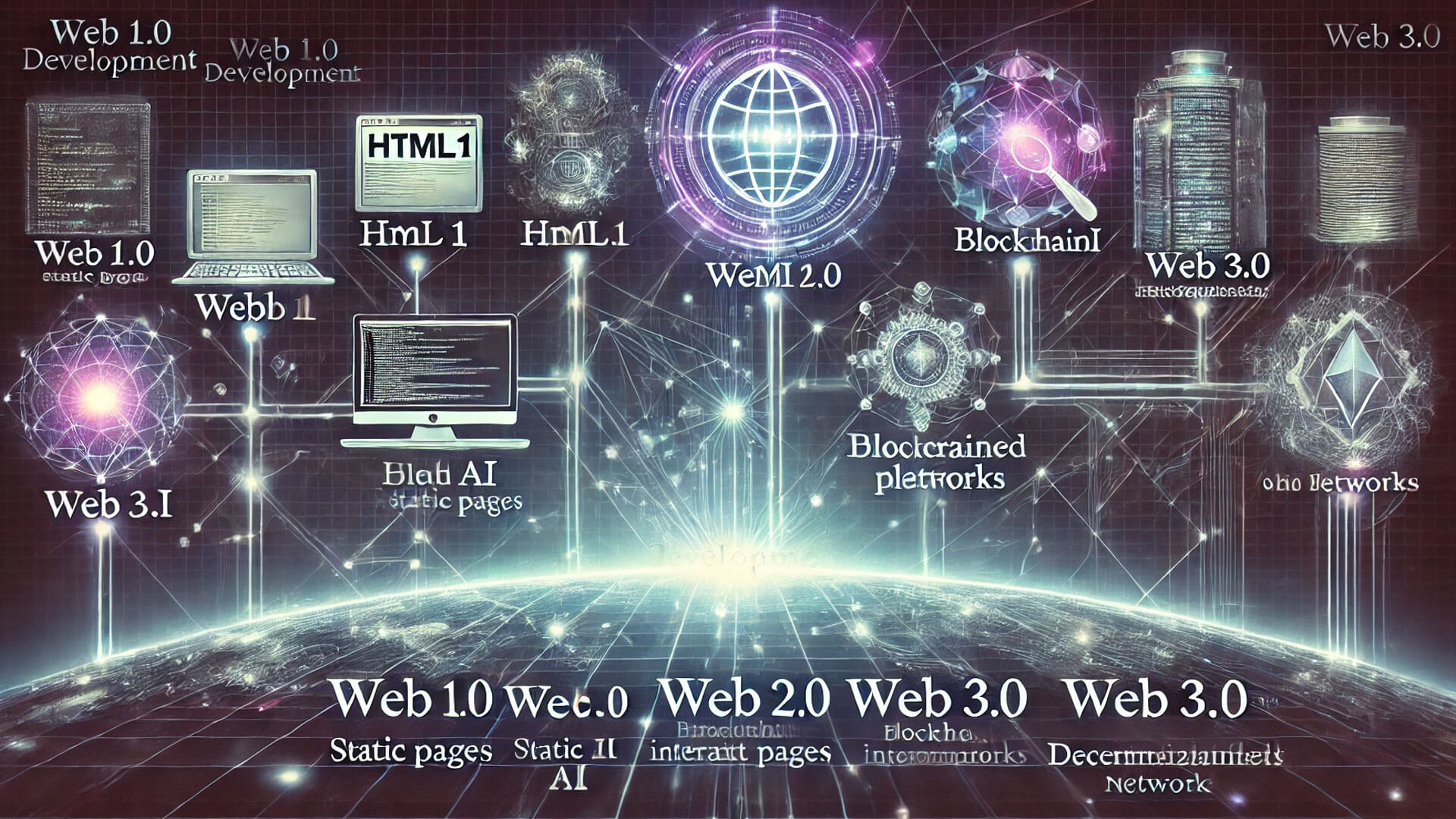
Web development has rapidly evolved since its inception in the early 1990s. From simple static pages based on HTML to the era of Web 3.0 powered by AI, blockchain, and decentralization, this journey highlights the dynamic nature of internet evolution. This article will explore the history of web development from HTML1 to Web 3.0 in detail.
The Web 1.0 Era (1990 - Early 2000s)
Web 1.0 was the first generation of the internet, characterized by static web pages where users could only read information without interactive elements. Key features of Web 1.0 include:
-
Simple HTML: Web pages were created using HTML1 through HTML3 without CSS or JavaScript.
-
Static and Read-Only: Users could only view information without editing or providing direct responses.
-
Basic Design: No attractive layouts, only plain text and simple images.
-
Limited Navigation: No complex hyperlinking systems as seen today.
-
No User Interaction: Websites were one-way, from the owner to the user, without any user-generated content.
During this period, websites functioned more like digital brochures, as seen in the first website ever created by Tim Berners-Lee in 1991. Many companies began to establish their online presence, but features and interactivity were still very limited.
Key Technologies in Web 1.0:
-
HTML (HyperText Markup Language): The foundation of all web pages.
-
HTTP (HyperText Transfer Protocol): The protocol for accessing web pages.
-
Early Browsers: Mosaic and Netscape Navigator facilitated internet access.
-
Centralized Hosting: Websites were hosted on single-location servers without data distribution.
The Web 2.0 Era (Early 2000s - Present)
Web 2.0 introduced a major revolution in web development by adding interactivity and a more dynamic user experience. Important innovations of this era include:
-
CSS and JavaScript: Enabled more attractive and interactive web designs.
-
AJAX: Allowed page updates without requiring a full reload, improving user experience.
-
Social Media and Collaborative Platforms: Emergence of Facebook, YouTube, Twitter, and interactive blogs.
-
Dynamic Websites: Sites were no longer static but allowed user contributions, such as Wikipedia and discussion forums.
-
E-commerce and Payment Gateways: Growth of platforms like Amazon and PayPal enabling online transactions.
Web 2.0 focused on user experience, making the internet more social and participatory. Platforms like YouTube, Wikipedia, and social networks became integral parts of this transformation.
Key Technologies in Web 2.0:
-
HTML5 and CSS3: Enabled flexible and interactive designs.
-
JavaScript Frameworks (React, Angular, Vue): Helped accelerate and optimize web application development.
-
Cloud Computing: Allowed flexible data storage accessible from multiple devices.
-
RESTful APIs: Facilitated seamless integration between different platforms and services.
-
Mobile Web Development: Introduction of responsive web design to ensure accessibility across various devices.
The Web 3.0 Era (Present and Future)
Web 3.0, also known as the Semantic Web, is the next evolution of the internet, focusing on decentralization, intelligence, and personalization. Key characteristics of Web 3.0 include:
-
Blockchain and Decentralization: Data is no longer stored on a central server but distributed across blockchain networks for greater transparency and security.
-
AI and Machine Learning: Websites can understand and tailor content based on user preferences.
-
Interoperability: Web applications can seamlessly communicate using decentralized technologies and APIs.
-
Enhanced Security and Privacy: With decentralization, data is more secure and transparent, giving users greater control over their information.
-
Semantic Web: Websites understand data contextually, delivering more relevant results to users.
Web 3.0 Implementations:
-
dApps (Decentralized Applications): Blockchain-based apps that operate without centralized control.
-
NFTs and the Metaverse: Blockchain-powered digital ownership and immersive experiences.
-
Smart Contracts: Self-executing contracts without intermediaries.
-
Self-Sovereign Identity: Users have full control over their digital identities.
-
IoT (Internet of Things): Smart devices interconnected for seamless data exchange.
The Future of Web Development
As Web 3.0 continues to evolve, several technologies are expected to shape the future of web development:
-
Web 4.0 (AI-Powered Web): A smarter internet driven by advanced AI for automation and natural interactions.
-
Augmented Reality and Virtual Reality: More immersive web experiences with AR and VR technologies.
-
Quantum Computing: Enhancing data processing speed for complex computations at a large scale.
-
Zero-Knowledge Proofs: New security systems allowing authentication without exposing sensitive data.
-
Decentralized Internet: Community-driven internet models promoting openness and freedom.
Conclusion
The evolution of web development from HTML1 to Web 3.0 showcases an extraordinary technological transformation. Web 1.0 was limited to reading static content, Web 2.0 introduced interactivity and collaboration, while Web 3.0 is shaping a smarter, more secure, and decentralized digital world. As technology continues to advance, the future of web development will offer even more innovative experiences for users worldwide. Developers and companies must continuously adapt to these changes to remain relevant in the ever-evolving digital ecosystem.